
15 min read · Updated: 2026-11-28
To cover your back in a backless dress, first choose support that stays below the dress’s lowest edge: a low-back converter, adhesive cups, or a well-fitted strapless bra may work, depending on the cut. For more coverage, try discreet fashion tape or a sheer layer that complements the design. Test everything while moving before you wear it out.
The right solution depends on the dress’s neckline, fabric and how much support you want. Check the back opening while standing, sitting and reaching, since a bra or cover-up that looks hidden in one pose may show in another.
This guide compares support choices, coverage methods and backless dress styles so you can make a practical choice before getting dressed. Small checks—such as testing adhesive on clean, dry skin and trying the complete outfit in daylight—can prevent last-minute adjustments.
- Match support to the dress’s lowest back point and front neckline.
- Test the full outfit while sitting, reaching and walking.
- Use skin-safe tape or a light layer for discreet coverage, and follow product directions.
- Check fabric, lining and seams before choosing a style or support option.
What makes a backless dress comfortable to wear
Check the opening and fit
A comfortable backless dress should stay in place without forcing you to tug at the bodice. Check that the back opening clears your chosen support, and that the front and side seams sit flat when you stand naturally. If the dress shifts as you move, consider another size or a different cut.
Try the dress with the underwear and shoes you plan to wear, then sit, walk and raise your arms. A neckline that gaps or a waist seam that twists can signal that the fit needs adjusting. Smooth, secure fabric is usually more comfortable than a tight fit that restricts breathing.
Pay attention to pressure points around the armholes, waist and hips, where a close-fitting dress can rub or pinch. If a seam feels uncomfortable during a short fitting, it is unlikely to feel better after hours of wear. A quick check in a mirror from the side and back can reveal pulling.
Balance support and movement
Choose a dress whose bodice supports you without relying on constant readjustment. Structured seams, a firm waist and a stable front neckline can help the garment feel secure even when the back is open. If the fabric is very soft, check whether it holds its shape as you move.
A backless style may feel different from a dress with a full back because its weight and support are distributed differently. Walk around in it and notice whether the fabric pulls down, rides up or shifts to one side. Those signs can point to a fit issue rather than a need for tighter straps.
Comfort also depends on the event and how long you expect to wear the dress. For a long evening, avoid solutions that need frequent checking, and bring a small repair option if the fabric or fastening is unfamiliar. A short trial at home can show whether the whole outfit stays manageable.
Choose a bra or support option that suits the cut
Match support to the neckline
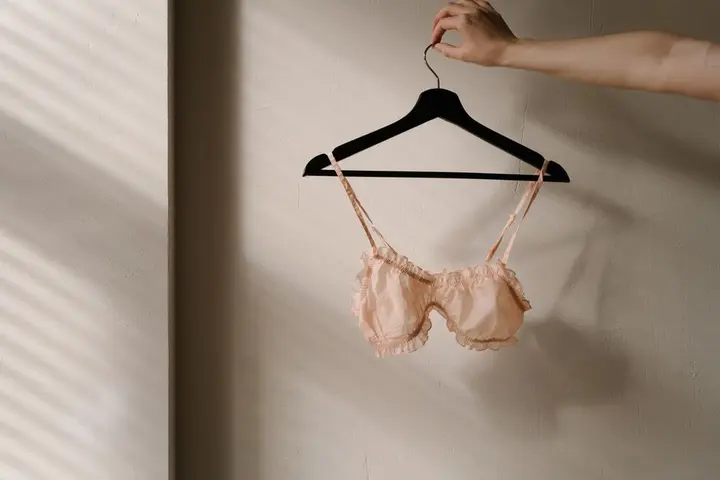
Match your support to the dress’s lowest back point and front neckline, rather than choosing a bra by name alone. A low-back converter can lower the band on some bras, while adhesive cups avoid a visible back band. Check the product’s fit and care directions before relying on it.
- Check the dress’s back and neckline.
- Choose support that clears both edges.
- Put on the full outfit and move.
- Keep the option that stays concealed and comfortable.
A strapless bra may work when the dress has enough fabric to conceal its band and the bodice feels secure over it. For a plunging front, plunge-shaped support may sit more cleanly than a standard cup. Try each option beneath the dress, since a bra that fits well alone can still show at the edges.
If you run a fashion shop as well as choosing supportive styles, Local Seo Services can help nearby shoppers find your business. For your own outfit, however, focus on how a bra sits beneath the exact dress: the back edge should remain hidden through ordinary movement, not just in a still mirror check.
Consider adhesive alternatives
Adhesive cups can provide light shaping without a band across the back, but they are not a universal substitute for a conventional bra. Their hold depends on fit, skin preparation and the garment’s construction. Follow the package directions, and do not use adhesive on irritated or broken skin.
Some adhesive designs join at the front or use separate cups, so compare their shape with the dress’s neckline and coverage. Apply them to clean, completely dry skin without lotion, then test the result under the dress. If an edge peeks out or begins to lift, switch to another support plan.
For more coverage without a standard bra, consider sewn-in cups or a dress with built-in structure if the garment offers them. A tailor may be able to add support without changing the back opening, but discuss the fabric and seam placement first. Check that any alteration remains comfortable when you sit and bend.
Add discreet coverage without hiding the design
Use tape with care
Fashion tape can help secure a shifting edge or keep fabric from revealing more than you intend, but it is not a substitute for structural support. Use tape made for clothing or skin as directed, and test a small area first. Keep it away from irritated skin and delicate dress surfaces.
Apply tape only after deciding where the fabric should sit, then press the garment into place without stretching it. A small piece can often secure a neckline or side edge more discreetly than a long strip. Remove it gently according to its directions, especially when the dress fabric is fragile.
Avoid using ordinary household tape on skin or clothing, since it may irritate or leave residue. If you need a more modest look, Seo Services can help a dress retailer improve how product pages are found; for styling, choose a cover-up that leaves the dress’s back opening visible.
| Option | Useful for | Check before wearing |
|---|---|---|
| Fashion tape | Securing a shifting edge | Skin and fabric compatibility |
| Sheer wrap | Temporary added coverage | Movement and texture |
| Modesty insert | Covering a specific area | Seam placement and finish |
| Cropped layer | Coverage over the shoulders | Bunching at the waist |
Layer without obscuring the back
A sheer wrap, lightweight shawl or cropped layer can add coverage while leaving the backless feature on display when you take it off. Choose a piece that rests comfortably over the shoulders and does not catch on the dress. Try the combination together to check that the textures and proportions feel balanced.
For a more continuous look, a sheer panel or modesty insert may cover a specific area while preserving the open shape around it. The best placement depends on the dress’s seams and fabric, so use a removable option for a trial before making permanent changes. A tailor can advise whether an insert will sit cleanly.
Keep the layer easy to remove if the back detail is central to the outfit. A bulky cardigan can hide the dress’s shape and add unwanted bunching at the waist, while a light wrap can provide coverage without competing with it. Check the full outfit in a mirror from several angles before leaving.
Fabric and construction affect how easily a dress conceals support or holds its shape.
Compare backless dress styles and fabrics
Read the fabric and construction
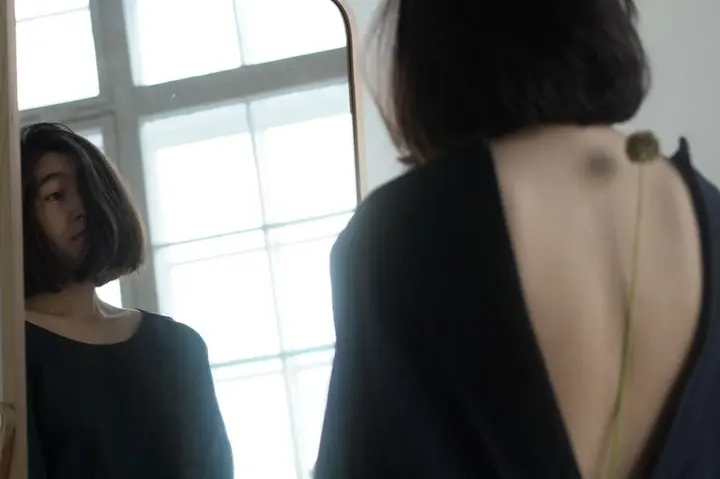
Fabric and construction affect how easily a dress conceals support or holds its shape. A lined bodice may disguise bra edges better than a thin, unlined fabric, while seams or boning can offer more structure. Look inside the garment and check whether the back opening leaves enough room for your preferred support.
- Choosing thin fabric without checking for show-through; test it in daylight.
- Assuming stretch fabric will conceal every edge; try it with your intended support.
- Ignoring the lining and seams; inspect the inside and back construction.
Stretch fabrics can move with the body, but a very close fit may reveal the outline of cups or fastenings. Satin can show marks and seams under bright light, so test the complete outfit in daylight before choosing underwear. Lace may be partly transparent, which makes color and texture especially important.
If you sell dresses online as well as shop for them, Seo Services can help improve how product pages are found. For a personal purchase, examine close-up images of the back, lining and seams, and look for a clear description of fabric stretch so you can judge how the dress may fit.
Compare cuts before buying
Choose a back shape that gives enough room for the coverage you want. A low scoop may accommodate a lowered bra band, while a narrow cutout can make even small fastenings visible. Compare the back view with your support option in mind, rather than judging the dress only from the front.
A full open back, a deep V and a cutout each create different styling constraints. A full opening may call for adhesive cups or built-in support, while a smaller cutout may work with a low-back converter. The dress’s front shape matters too, because plunge and strapless necklines need different support.
Consider the occasion as well as the appearance: a dress that needs constant adjustment may not suit a long evening or an active event. When possible, try the style on and move in it before removing tags. If ordering remotely, check the returns policy and keep packaging until the fit is confirmed.
Avoid visible straps and slipping layers
Secure Straps Out of Sight
Check every strap from behind in a full-length mirror before leaving, because a strap that seems hidden from the front may show when you move. Adjust convertible bra straps to follow the dress’s neckline, and tuck them only when the garment can hold them without pulling or creating pressure.
- ☐ Check the back and sides in a mirror.
- ☐ Raise your arms to test whether straps stay hidden.
- ☐ Sit down and check that the band remains level.
- ☐ Inspect the outfit in bright, even light.
If a strapless bra shifts, the band may be too loose or the cups may not match your shape. Recheck the fit while lifting your arms and sitting down; a bra that stays level through those movements is less likely to need constant adjustment during the occasion.
For a clean finish, compare the bra’s edges with the dress under the same lighting you expect to encounter. Thin or pale fabric can reveal seams and outlines that disappear in a dim fitting room, so inspect the back and sides from several angles before choosing your underlayer.
- Check the back in a full-length mirror.
- Raise your arms to test the band.
- Look for edges under bright light.
- Adjust straps before dressing fully.
Keep Added Layers In Place
Adhesive cups and body tape work best on clean, fully dry skin, without lotion or body oil underneath. Follow the product’s directions for placement and removal, and test a small area beforehand if you have sensitive skin or have not used that adhesive before.
Position tape while standing naturally rather than pulling the skin sharply upward. Excess tension can feel uncomfortable as you move and may cause the tape to peel at an edge; smooth it down gently, then test a few natural turns and reaches before putting on the dress.
A dress with a low back can sometimes hold a removable modesty panel or sewn-in cup more securely than a separate adhesive layer. Ask a tailor whether a discreet alteration suits the fabric and construction, especially if you plan to wear the dress repeatedly rather than for one event.
Make the look work for your occasion
Match Coverage to the Setting
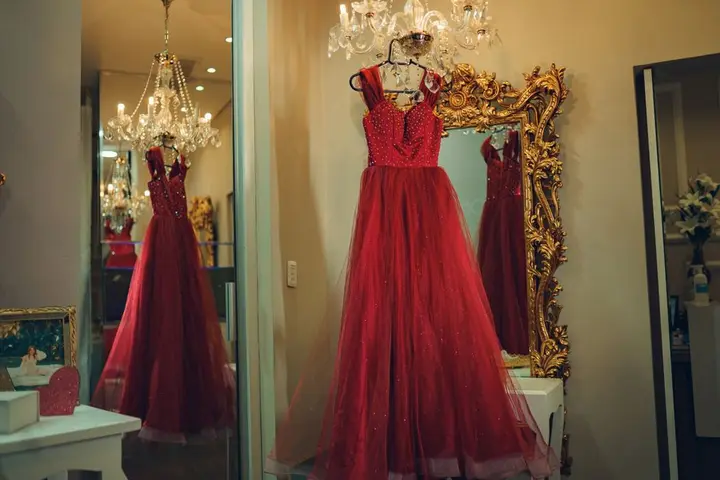
Choose how much back to reveal according to the event, the dress code, and how comfortable you feel moving in the garment. A deep open back can suit an evening celebration, while a sheer inset or higher back may feel more practical for a daytime gathering or a long seated dinner.
Consider the room as well as the invitation: cool air, outdoor seating, and extended time in air conditioning can make a bare back less comfortable. A light wrap or jacket gives you an easy layer between arrivals and the main event, provided it does not snag delicate fabric.
A fashion business serving shoppers in Leicester could use Leicester Seo Services to help local customers discover its occasionwear and in-store offerings. Keep the styling decision focused on your own event, and choose coverage that lets you enjoy the dress without repeatedly checking whether it has shifted.
Balance Accessories and Silhouette
Let the open back remain the focal point by keeping necklaces and other accessories from competing with it. If a necklace rests across the exposed skin or tangles with the dress, choose earrings or a bracelet instead, then check the complete outfit from behind as well as from the front.
Hair can change how much of the back is visible and whether a fastening stays exposed. Wear it up, swept to one side, or down according to the dress’s shape, and check that loose strands do not catch in a clasp or cover a detail you want to show.
Choose shoes and a bag that suit the event and allow you to move comfortably, rather than adding pieces that require frequent adjustment. A small shoulder bag may rub against an open-back edge, so test its strap with the dress and switch to a hand-held style if it catches.
- Keep necklaces clear of the open back.
- Test hair placement around the fastening.
- Check bag straps for rubbing or snagging.
Check fit and support before you head out
Test Movement and Fastenings
Do a short movement check in the complete outfit before deciding it is ready. Walk, sit, reach, and turn your shoulders; these actions reveal whether the neckline gapes, the skirt pulls, or the back fastening presses against your skin.
Fasten the dress fully and check that hooks, ties, and zips lie flat rather than twisting under tension. If a closure strains when you sit or breathe normally, do not rely on a last-minute adjustment; a tailor can assess whether the fit needs a small alteration.
Wear the undergarment and shoes you expect to use, since both can change how the dress hangs. A different bra can alter the neckline, while heel height can shift the hem and posture, making a fitting that seemed secure feel less balanced once you are dressed.
- Walk and turn in the complete outfit.
- Sit and reach without holding the dress.
- Check closures for strain or twisting.
- Repeat the fit check in your event shoes.
Plan for Comfort Over Time
Wear the dress at home for a little while before the event if you are unsure about its support. Notice pressure points, rubbing, and any need to pull the fabric back into place; a small discomfort during a short fitting can become distracting after hours of wear.
Pack only the adjustments you may genuinely need, such as a spare fastening or skin-safe adhesive product you have already tested. Keep it separate from the dress in a small pouch, and avoid trying a new tape or adhesive for the first time just before an important occasion.
If the outfit still slips despite careful adjustment, change the support plan rather than repeatedly tugging at the dress. A different bra shape, a removable panel, or a modest alteration may provide steadier coverage, depending on the back cut and the fabric’s ability to support it.
Care for delicate fabrics and fastenings
Protect Fabric from Adhesives
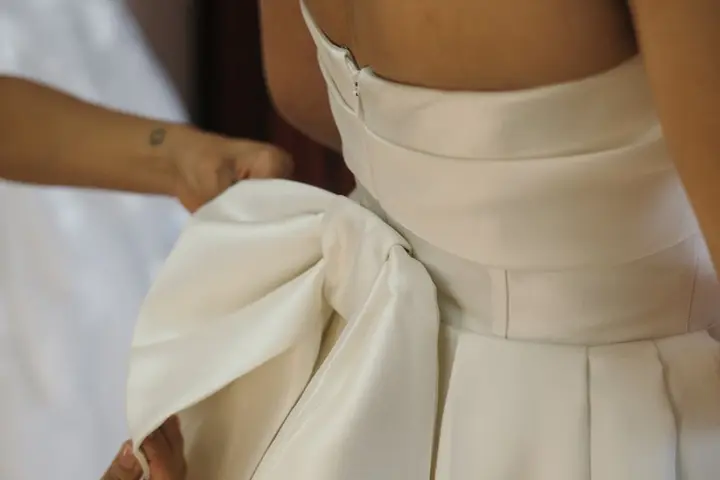
Keep adhesive products away from the dress itself unless the maker specifically says they are safe for that fabric. Tape residue can mark satin, snag lace, or leave a visible patch on sheer material, so apply and remove body tape carefully while keeping it clear of the garment.
- Keep body adhesive off the dress fabric.
- Remove sharp accessories before dressing.
- Follow the garment’s care label after wear.
Before dressing, remove rings and check that nails, bracelets, and hair accessories have no sharp edges. Lace and fine mesh can catch easily, and even a small snag near an open back may become more noticeable when the fabric is stretched or exposed.
Read the care label before cleaning the dress after wear, especially if it combines materials or includes beading and delicate trim. Do not rub a mark aggressively or use an untested stain treatment; gentle handling and the recommended cleaning method help preserve the fabric’s finish.
Store Closures Without Strain
Close zips and fasten hooks before storing the dress so they do not catch on other garments. Use a hanger that supports the shoulders without stretching the neckline, and leave enough space around delicate fabric to prevent creasing and friction.
Avoid hanging a heavy dress by narrow straps if they begin to stretch under its weight. A padded hanger or a garment bag with internal support can help distribute the load, while a folded dress should be placed carefully so embellishments do not press into the fabric.
After wearing the dress, let it air briefly in a clean, dry place before putting it away, unless its care instructions say otherwise. Check the fastening for loose threads or damage while the garment is still easy to inspect, and arrange repairs before the next occasion.
Frequently asked questions
Can I wear a regular bra with a backless dress?
Usually, a regular bra’s band or straps will show if the dress has a low or open back. Whether it can work depends on the exact cut: some dresses conceal the band at the sides, while others expose it clearly. Try the dress with the bra and check from behind, then consider a low-back, strapless, adhesive, or sewn-in option if the fit allows.
How do I choose between body tape and adhesive cups?
Adhesive cups provide coverage and light shaping, while body tape can offer more flexibility for unusual necklines or different levels of lift. The dress’s construction and your comfort matter more than choosing one option by default. Test your preferred method on clean, dry skin before the event, follow its instructions, and avoid use if it irritates your skin.
What can I do if the dress feels too exposed?
You do not have to wear a dress in a way that makes you feel self-conscious. Consider a sheer inset, a removable modesty panel, or a tailored adjustment that raises the back while preserving the overall silhouette. A wrap can add temporary coverage, too. Try each option with the dress and check that it stays secure when you move.
How can I remove body tape comfortably?
Follow the tape maker’s removal directions and take it off slowly rather than pulling it away quickly. If the instructions permit, a suitable oil or remover may help loosen the adhesive; keep it away from the dress and avoid rubbing irritated skin. Stop if removal becomes painful, and do not use tape on broken or sensitive skin.
Wear Your Backless Dress with Confidence
The most reliable solution is the one that suits the dress’s back shape, stays comfortable as you move, and remains discreet under its fabric. Check straps, closures, and coverage in bright light, then test the whole outfit by walking, sitting, and reaching. Small details such as hair, accessories, and a wrap can also affect both comfort and the finished look.
Before your next occasion, put on the dress with the exact support, shoes, and accessories you plan to wear. Give yourself time to adjust the fit or ask a tailor about a secure alteration, rather than relying on a last-minute fix. When the outfit feels steady through ordinary movement, you can focus on the event instead of managing your back coverage.


